[~8 min read]
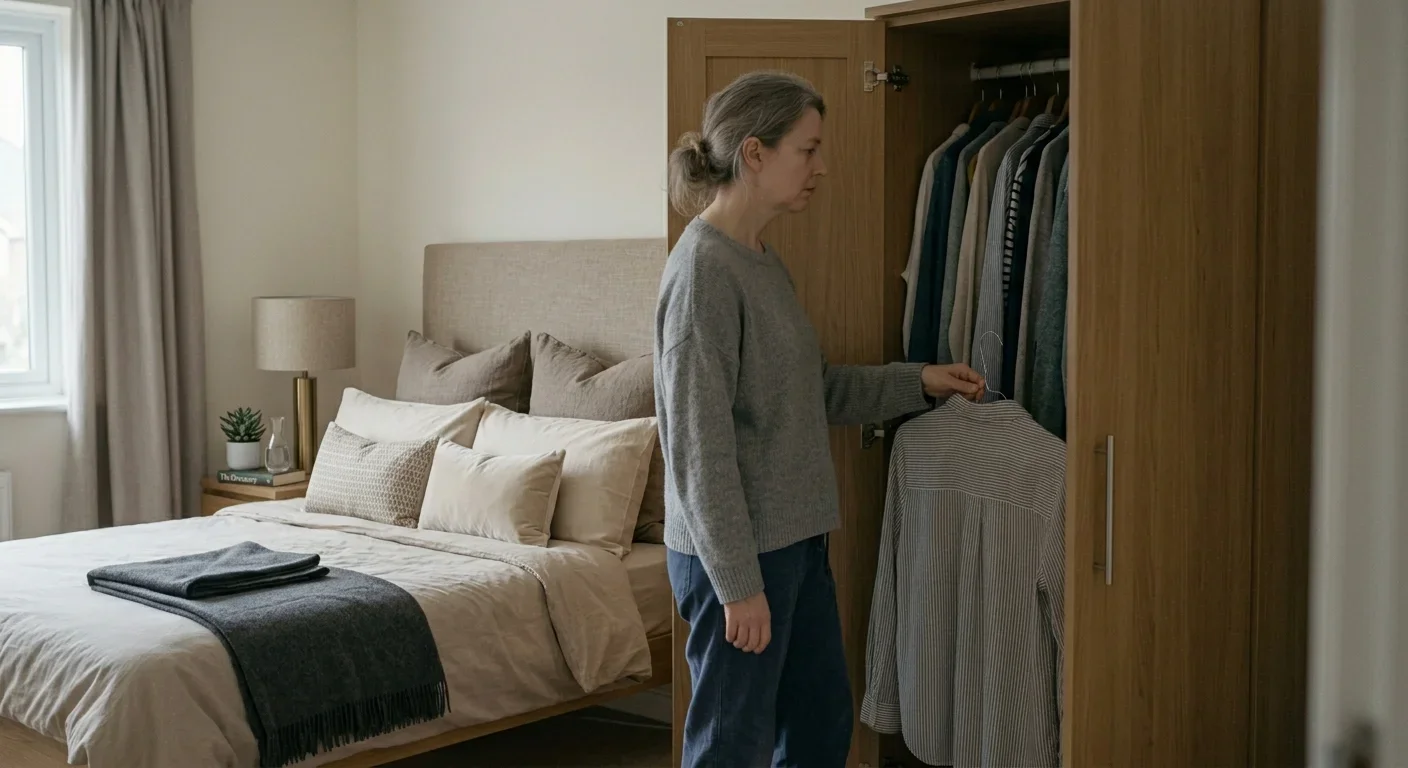
Even I’m not immune. A few weeks ago I stood in front of my wardrobe for eleven minutes trying to decide what to wear, then reached for the same black top I always wear when I can’t be bothered deciding. I made coffee but forgot to drink it. Answered emails but couldn’t remember what any of them said.
By 2 p.m. I was googling “why do I feel so flat” like that would fix it.
That’s when I knew: I was in the funk.
Not depressed. Not burned out. Just stuck in this fog that makes everything feel harder than it should be.
The funk is what happens when you’ve been hiding for too long.
Not consciously. But you’ve been performing competence when you have nothing left to give. Putting everyone else’s needs ahead of your own. Saying yes when everything in you is screaming no. Shrinking so gradually you didn’t notice you were doing it.
Your body keeps score. And eventually, it says: “Enough. Something has to change.”
That stale, restless feeling? That’s not laziness. It’s a signal.
If that sounds familiar – or if you’re in it right now – this one’s for you.
What the Midlife Funk Really Is
First, let’s be clear: the midlife funk isn’t depression (though if you suspect that’s what you’re experiencing, please reach out for professional support).
And it’s definitely not laziness.
It’s not about being unmotivated, ungrateful, or ‘too tired to care.’
The funk is what happens when the gap becomes impossible to ignore.
The gap between who you’ve been performing as and who you actually are. The gap between the life you built for a younger version of yourself and the one that fits you now.
Why does it hit in midlife specifically?
Because midlife is when everything shifts at once. Your body’s changing. Your roles are evolving. Your patience for bullshit is gone. And all of that creates this low-grade static that drains you before the day even starts.
It feels like:
- A loss of spark or motivation
- A general sense of “meh” about things that used to feel fun
- Creeping resentment toward routines or responsibilities that once felt manageable
- Running on autopilot but feeling completely disconnected
The funk is your system saying: “We can’t keep living like this.”
It’s not a sign you’re failing. It’s a signal that something in your life needs attention – and that a shift, even a small one, could help you feel like yourself again.
Why It Shows Up: 3 Common Triggers
- Physical and Hormonal Shifts
Let’s start with biology: midlife brings changes to hormones, sleep patterns, metabolism, and energy levels.
When your body feels off, your mood and motivation follow. This isn’t “all in your head” – your biology genuinely sets the stage for the funk.
I can tell when my hormones are doing their thing because suddenly the smallest inconvenience – like the coffee shop being out of almond milk – feels catastrophic. That’s not me being dramatic. That’s chemistry.
- Identity Transitions
Maybe the kids don’t need you as much anymore. Maybe your career feels like it’s on autopilot. Or maybe your relationships have shifted in ways that leave you wondering: “Who am I in all this?”
You’ve been “Mum” and “Professional” and “Partner” for so long, you forgot there was a whole person underneath those roles. And now that those roles are shifting, you’re left with this unsettling question: Who am I when I’m not performing for everyone else?
When your sense of identity feels wobbly, even small challenges start to feel overwhelming.
- Emotional and Mental Overload
Years (or decades) of juggling work, family, relationships, and everything else leave you running on fumes.
The funk often emerges when your mind finally says: “Enough. Something has to change.”
It’s not that one thing pushed you over the edge. It’s that a thousand small compromises accumulated – and your system can’t carry them anymore.
What Happens If You Ignore It
The problem with the funk is it doesn’t resolve itself. It just becomes your new normal.
At first, you think it’ll pass. A few weeks go by and nothing’s changed. A few months later, you’ve stopped talking about it because what’s the point? Eventually, you forget what “energised” even feels like.
The funk doesn’t disappear. It settles in. And before you know it, you’ve spent a year living at half-speed – going through the motions but never quite present.
The funk is a signal. And signals that go unaddressed don’t fade – they just get normalised.
The good news? You don’t need massive action to shift it. You just need to start.
How to Break Free: 5 Moves That Actually Work
These aren’t random tips – they map to how transformation actually happens. When you work with these five areas, you’re addressing the funk at its root.
- Notice What’s Off
Before you can fix the funk, you have to see it clearly.
For one week, pay attention to your energy. Not in a “track everything” way – just notice:
- What tasks make you want to procrastinate vs. what you actually look forward to?
- What conversations leave you drained vs. which ones energise you?
- When during the day do you feel most like yourself?
My version of this … A 10-minute walk around the block. I come back less irritable every single time. It’s not about exercise – it’s about interrupting the pattern and seeing what’s actually happening instead of powering through.
- Clear One Thing
The funk loves clutter because clutter keeps you distracted from what actually needs to change.
Start with one clear-out – your choice:
Physical: One drawer. One shelf. Your inbox. (I deleted 1,200 unread emails last week. Did I miss anything critical? Not one thing. Did my shoulders drop two inches? Absolutely.)
Or go the other way – add one thing that changes what you look at all day. A bold piece of art. Better lighting. Anything that breaks the visual monotony.
Mental: Write down the story you keep telling yourself about why you can’t change anything right now. Then read it back and ask: Is this actually true, or is this just fear talking?
Getting it out of your space (or out of your head) creates room to breathe.
- Add One Soul Filler
Do one thing every day that feels genuinely good – not “should feel good,” but ACTUALLY feels good:
- Call the friend who makes you laugh so hard you pee a little bit
- Make dinner with true crime podcasts (chopping vegetables while someone narrates a murder investigation makes me feel weirdly alive)
- Sit outside with your coffee for five minutes without your phone
These micro-joys won’t solve everything, but they lift your baseline mood so you can tackle bigger changes from a better headspace.
- Experiment With One Small Disruptor
The funk thrives on autopilot, so break the pattern with small tests.
Think of it like trying on outfits. You don’t commit to anything – you’re just seeing what feels better.
What if I:
- Drove past the beach on my way to work instead of the highway? (Adds 4 minutes. Changes my entire morning.)
- Quit that committee I dread and volunteered at the animal refuge?
- Worked part-time and started writing again?
Choose one thing you’re curious about, then test it in small ways. No procrastinating. No overthinking. Just learning, adjusting, moving forward.
Because clarity comes from action, not thought.
- Move Your Body
Physical movement literally changes your brain chemistry.
You don’t need to train for a marathon – even a walk around the block or dancing in your kitchen while you belt out your favourite song shifts your mood.
Movement tells your brain: we’re not stuck anymore.
It breaks the cycle of stagnation. And honestly? Sometimes the fastest way out of the funk is just to move.
Why Small Shifts Create Big Changes
You don’t need to dismantle everything you’ve built to feel better.
Most funks don’t require drastic steps – they require gentle but deliberate changes to get your mind and body back in sync.
The sooner you start making these tiny adjustments, the faster the funk begins to fade.
Small steps are sustainable, and sustainable is what actually changes things. Every time you do what you said you’d do, your brain learns: we’re moving again.
My friend who spent three consecutive weekends staring blankly at her living room walls? She didn’t remodel the house. She just bought a ridiculously bright, oversized piece of art, hung it up, and changed the lighting. It broke the visual monotony of her daily routine.
My corporate client who felt like she was drowning in grey spreadsheets? She started leaving her phone in her desk drawer for exactly fifteen minutes at lunch, walking to a nearby park, and sitting on the grass without checking a single notification.
Me? When the fog rolls in and everything feels like a drag, I force myself to put on a driving playlist that makes me feel like the main character in a movie, roll the windows down, and take the long way home along the coast.
None of us blew up our lives. We just stopped pretending we were okay with the fog.
Ready to Assess Where You Stand?
If you’re wondering whether you’re in a temporary funk or whether it’s time for bigger changes, the Thriving, Striving or Surviving Quiz will tell you where you actually stand.
It’ll show you whether you’re currently thriving, striving, or just surviving – and what your next step could be.
Because midlife doesn’t have to be a slow slide into “meh.” It can be the stage where you feel most vibrant and alive – once you recognise what’s happening and take that crucial first step to shift it.
This conversation continues on the Hello Prime Life podcast. Listen to Episode 003: “The Midlife Funk: How to Escape ‘The Beige’” to explore what the funk actually is, why it ambushes you in midlife, and one more way to break free that’s not in this post.”